
Water heaters
Signs Your Water Heater Needs Repair or Replacement
Water heaters usually give some warning before they quit. Knowing which symptoms point to a simple repair and which ones mean the tank is near the end helps you make the call on your schedule — not after it leaks into the garage.
7 min read West Coast Plumbing Pro editorial
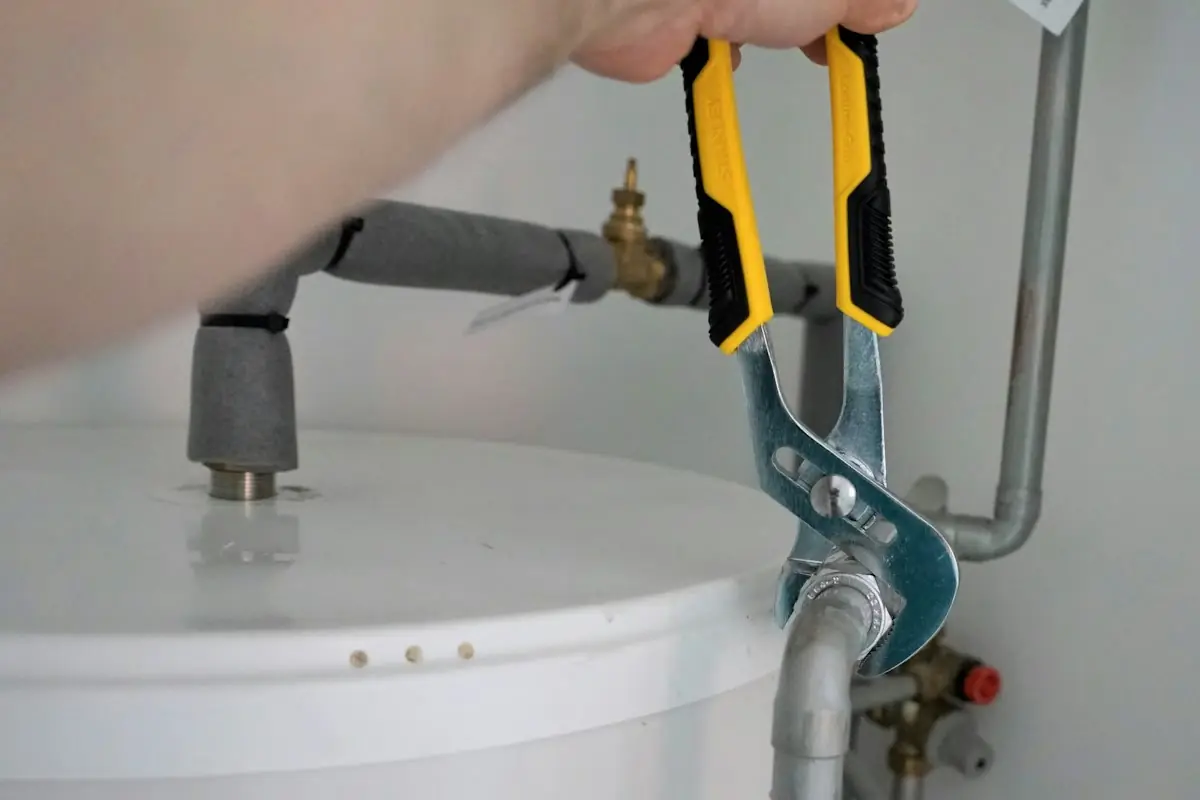
A conventional tank water heater is a simple appliance: a steel tank lined with glass, a gas burner or electric elements to heat the water, a thermostat, and a handful of valves. Most of those parts can be replaced. The tank itself can’t. That one fact drives nearly every repair-or-replace decision.
If a part has failed, a repair often makes sense. If the tank is corroding or leaking, replacement is the only real fix. Below are the common symptoms, what usually causes them, and how to tell which category you’re in.
Symptoms and what they usually mean
No hot water at all
On a gas unit, often a pilot or ignition problem, a failed thermocouple or flame sensor, or a gas supply issue. On an electric unit, a tripped breaker, a tripped high-limit reset, or a failed element or thermostat. Usually repairable.
Hot water runs out fast
On electric models, the lower element has often failed. On either type, heavy sediment can take up tank volume. It can also mean the tank is simply too small for the household.
Lukewarm water
A thermostat set too low, a failing element or thermostat, or a broken dip tube letting cold water mix at the top of the tank.
Rumbling or popping
Sediment on the bottom of the tank traps water that boils and pops as the burner fires. Flushing may help on a younger tank; on an older one it’s a sign of wear.
Rusty or discolored hot water
If only the hot side is discolored, the tank lining or anode rod may be failing. If both hot and cold are rusty, look at the supply pipes instead — older galvanized lines are a common cause.
Rotten-egg smell
Usually a reaction between bacteria in the water and the tank’s anode rod. Often fixable with an anode change. If you smell gas — a different, sharper odor — that’s an emergency (see below).
Water around the base
Check where it’s coming from. A leaking fitting, drain valve or relief valve discharge can be repaired. Water seeping from the tank body itself means the tank has failed.
Relief valve dripping
The temperature and pressure relief valve may be worn, or the system may have a pressure problem, such as a missing or failed expansion tank. Have it looked at — don’t cap it.
How to find your water heater’s age
Age is one of the biggest factors in the repair-or-replace decision, and most homeowners don’t know it. Here’s how to find it:
- Look at the rating labelThe label on the side of the tank lists the manufacturer, model and serial number. Some labels print the manufacture date directly.
- Decode the serial numberMost manufacturers encode the month and year of manufacture in the serial number, but every brand does it differently — some put the year first, some use letters for months. Search the brand name plus “serial number date code,” or check the manufacturer’s website.
- Check paperworkHome inspection reports, permits and the original installation receipt often list the install date. A permit sticker or tag on the unit may also help.
- Ask a plumberIf the label is unreadable, a plumber can usually date the unit from the model and serial numbers.
Tank water heaters commonly last somewhere around 8 to 12 years, though water quality, maintenance, and how hard the unit works all play a part. Tankless units typically last longer with regular maintenance. Age alone doesn’t mean you must replace a working heater, but it should shape how much you’re willing to spend repairing one.
Repair or replace? A practical guide
| Situation | Usually | Why |
|---|---|---|
| Tank is leaking from the body or seams | Replace | A breached tank can’t be repaired, and leaks get worse. |
| Rust-colored hot water from an older tank | Replace soon | Suggests the lining is failing and the tank is corroding from inside. |
| Pilot, thermocouple, igniter or gas valve problem | Repair | These are replaceable parts, especially on a younger unit. |
| Failed electric element or thermostat | Repair | Common, routine parts. |
| Leaking drain valve or fitting | Repair | The tank is fine; only the part has failed. |
| Heavy sediment noise on an older tank | Consider replacing | Flushing a long-neglected tank can loosen sediment and cause leaks at the drain valve. |
| Unit is near or past its expected lifespan and needs a major repair | Usually replace | Money spent on an old tank buys little time. |
| Hot water no longer keeps up with the household | Replace or resize | A larger tank, tankless or heat pump unit may fit your needs better. |
If you’re leaning toward replacement, it’s worth considering your options rather than automatically buying the same unit again. Our water heater installation page walks through tank, tankless and heat pump models and what to ask about sizing. If the symptoms point to a part, see water heater repair.
Not sure if this needs a plumber?
Describe what you’re seeing and get a straight answer.
Safety: what not to ignore
If you smell gas: don’t operate light switches, appliances or anything that could spark. Leave the house, then call your gas utility or 911 from outside. Don’t try to relight a pilot while you smell gas.
A few other things deserve attention right away:
- The temperature and pressure (T&P) relief valve. This valve opens if the tank gets too hot or the pressure gets too high. It should have a discharge pipe running toward the floor or a drain. Never plug it, cap it or remove the pipe. If it’s discharging water, have the cause found.
- Scorch marks or soot around the burner access on a gas unit can mean a venting or combustion problem. Have it inspected before continuing to use it.
- The vent pipe on a gas water heater should be securely connected and slope upward. A disconnected vent can let combustion gases into the home. A working carbon monoxide alarm near sleeping areas is essential in any home with gas appliances.
- Seismic strapping. Oregon’s plumbing code requires storage-tank water heaters to be anchored or strapped against earthquake movement. If yours isn’t, ask a plumber about it.
- Water temperature. Many manufacturers ship tanks set around 120°F, which is a common recommendation to reduce scalding risk. Higher settings increase the risk of burns, especially for children and older adults.
Maintenance that extends a water heater’s life
Flush the tank
Sediment settles on the bottom of the tank over time. Draining a few gallons from the drain valve periodically — the manufacturer’s manual will suggest how often — helps keep it from building up. Turn off the power or set a gas unit to “pilot” first, attach a hose to the drain valve, route it somewhere safe for hot water, and drain until the water runs clear.
One caution: if the tank has gone years without flushing, opening the drain valve can stir up a lot of sediment, and older plastic drain valves sometimes don’t close fully afterward. On an older, neglected tank, it’s reasonable to have a plumber do the first flush.
Check the anode rod
The anode rod is a metal rod inside the tank that corrodes so the tank doesn’t. Once it’s used up, the tank itself starts to rust. Checking and replacing it every few years can meaningfully extend tank life. Removing it often takes a large socket and a lot of torque, and the rod may need to be a flexible segmented type in tight spaces, so many homeowners leave this one to a plumber.
Test the relief valve
Many manufacturers recommend lifting the T&P valve lever briefly once a year to make sure it opens and closes. The water will be hot. If the valve won’t reseat and keeps dripping, it needs replacement.
Keep the area clear
Gas water heaters need air for combustion. Don’t store paint, gasoline, solvents or piles of boxes around them. In a garage, the burner on many gas units must be elevated off the floor to reduce the risk of igniting fumes.
Planning ahead for a replacement
The worst time to choose a water heater is the morning after the old one fails. If your tank is getting older, a little planning gives you more options:
- Measure the space. Note the height, the clearance around the unit, and whether it sits in a garage, closet or crawlspace. Newer models can be larger than the tank they replace because of added insulation.
- Note the fuel and venting. Switching from gas to electric, or from a tank to a tankless unit, can involve new gas lines, venting, or electrical circuits. A plumber can tell you what your home would need.
- Think about how you use hot water. The number of bathrooms, people, and simultaneous showers matters more than the size of the house.
- Ask about permits. Water heater replacement typically requires a permit in Oregon. A licensed contractor should handle it as part of the job.
- Ask about utility programs. Energy-efficiency incentives for heat pump water heaters are sometimes available through utilities or state programs; check what’s current before you buy.
When to call
Call a plumber if you see water coming from the tank, smell gas (after you’ve left the house and called the gas utility), notice the relief valve discharging, or have no hot water and the basic checks — breaker, pilot, thermostat setting — don’t fix it. If the unit is old and showing more than one warning sign, it’s worth a conversation about replacement before it fails on its own schedule.
For more seasonal maintenance tips for your home, see common plumbing problems Salem homeowners should watch for.
This article is general information for homeowners, not a diagnosis. Plumbing conditions vary — have a qualified plumber inspect anything involving gas, electrical connections, or sewage.