
Leak Detection · Salem, OR
Leak Detection in Salem, OR
A hidden leak can run for months inside a wall, under a floor or in a crawlspace before you see a stain. Professional leak detection finds the source with minimal opening of walls and floors — so the repair is targeted, not a guess.
- Wall, ceiling & floor leaks
- Crawlspace & slab leaks
- Water meter & pressure testing
- Documentation for insurance
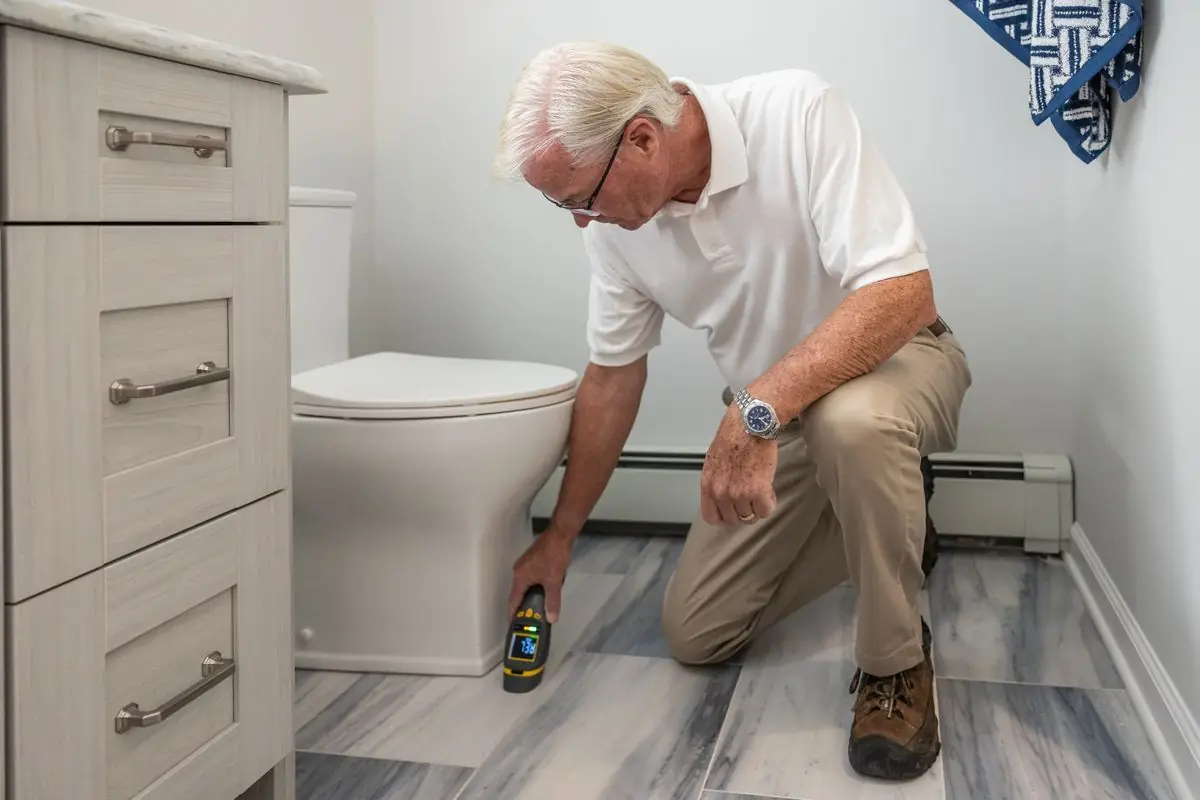
Why hidden leaks matter
A burst pipe gets your attention immediately. A slow leak doesn’t. A pinhole in a copper line inside a wall, a weeping fitting in the crawlspace, or a failing shower pan can drip quietly for months, soaking subfloor, insulation and framing. By the time you see a stain or smell mildew, the repair often involves more than plumbing.
Leak detection is about finding the exact source with as little damage as possible. The alternative — opening walls until you find wet pipe — costs more and makes a bigger mess.
Signs of a hidden leak
A higher water bill
A noticeable jump without a change in your habits is often the first clue. Compare against the same months last year.
The sound of running water
Hissing or trickling in a wall when nothing is on usually means a pressurized supply line is leaking.
Stains, bubbling or soft spots
Ceiling stains below bathrooms, bubbling paint, and soft or cupped flooring all point to water where it shouldn’t be.
Musty odors or mold
A persistent musty smell in a closet, cabinet or room often means ongoing moisture somewhere out of sight.
Warm spots on the floor
A warm patch on tile or concrete can indicate a hot water line leaking beneath it.
Low water pressure
A sudden drop in pressure across the house can mean water is escaping before it reaches your fixtures.
Check for a leak yourself: the water meter test
Before you call, this simple test tells you whether water is leaving your pipes when it shouldn’t be.
- Turn everything offMake sure no faucets, toilets, irrigation, washing machine, dishwasher or ice maker are using water.
- Find your meterMost Salem-area homes have a meter in a box near the street or sidewalk. Lift the lid carefully — spiders and standing water are common.
- Look at the leak indicatorMany meters have a small triangle or star-shaped dial that spins with even tiny flows. If it’s moving, water is flowing somewhere.
- Take a reading and waitWrite down the numbers, wait an hour or two without using water, and read it again. Any change means a leak.
- Narrow it downClose your main shutoff at the house and check the meter again. If it stops, the leak is inside the house. If it keeps moving, the leak may be in the service line between the meter and the house.
Rule out toilets first. A silently running toilet can waste a lot of water. Add food coloring to the tank, wait 15 minutes without flushing, and check the bowl. Color in the bowl means a leaking flapper — see toilet repair.
How a plumber pinpoints the leak
Professional leak detection uses several methods together, because each has strengths and blind spots:
- Pressure testing: isolating sections of the system and watching for pressure loss narrows the leak to a specific line — hot or cold, supply or service line.
- Acoustic detection: sensitive listening equipment picks up the sound of water escaping a pressurized pipe through floors, walls and slabs.
- Thermal imaging: infrared cameras show temperature differences, useful for hot water leaks and tracing damp areas behind drywall.
- Moisture meters: map how far water has spread in drywall, wood and subfloor, which helps define the repair area.
- Visual inspection: often the crawlspace, attic or under-sink cabinet tells a lot once you know what to look for.
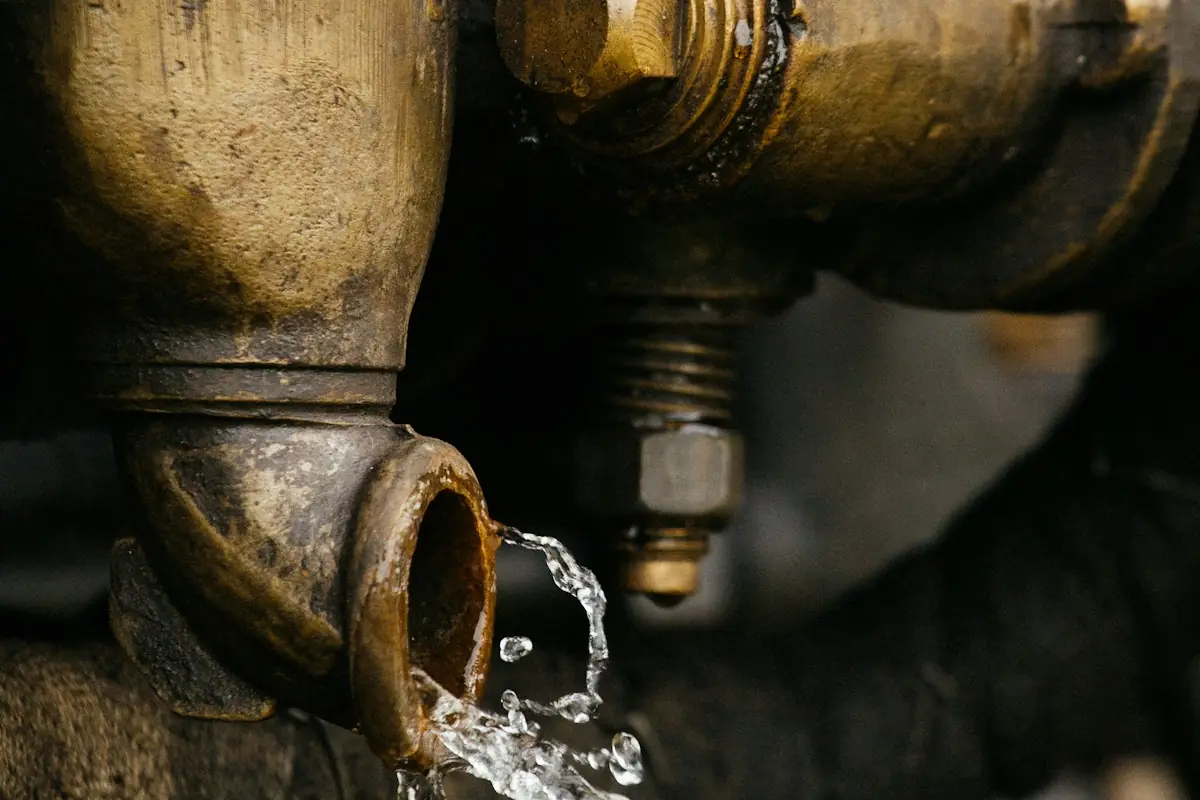
Crawlspace leaks in Salem homes
Many houses in the Salem area are built over crawlspaces, with supply and drain lines running beneath the floor. That’s convenient for repairs but makes leaks easy to miss — nobody goes down there unless they have to. A drip onto the vapor barrier can pool for a long time, raising humidity, attracting pests and encouraging mold on joists and subfloor. If you haven’t looked in your crawlspace in a while, it’s worth a check with a flashlight, especially after a cold snap, when pipes in an unheated crawlspace are most likely to split.
Common leak sources to know about
Some leaks show up again and again in residential plumbing. Knowing them helps you spot trouble early:
- Supply lines and shutoff valves under sinks and behind toilets, especially older braided or plastic lines.
- Shower pans and tub drains that leak only when the shower is used, often showing up as a ceiling stain below.
- Pinhole leaks in copper pipe, which can appear in older lines and tend to recur.
- Corroded galvanized pipe in older homes, which leaks at threaded joints first.
- Dishwasher, ice maker and washing machine connections, which vibrate and loosen over time.
- The water service line between the meter and the house, which shows up as a meter that keeps moving with the main shutoff closed.
After the leak is found
Once the source is located, the plumber will explain the repair — replacing a fitting, a section of pipe, or in some cases rerouting a line rather than breaking into a slab. For older homes with recurring leaks in aging pipe, our pipe repair page covers partial and whole-house repiping options.
If there’s water damage, take photos before anything is opened or removed, and ask for a written description of the leak’s source and cause for your insurance company. Wet drywall, insulation and subfloor need to be dried thoroughly to prevent mold; for anything beyond a small area, a water damage restoration company may be needed alongside the plumber.
For more on early warning signs around the house, read common plumbing problems Salem homeowners should watch for.
Not sure if this needs a plumber?
Describe what you’re seeing and get a straight answer.
Common signs are an unexplained jump in your water bill, the sound of running water when everything is off, warm spots on a floor, musty smells, stains, bubbling paint or warped flooring. The simplest test is to turn off every fixture and watch your water meter — if it keeps moving, water is going somewhere.
They combine several tools: pressure testing to isolate which line is leaking, acoustic listening equipment that picks up the sound of escaping water, thermal imaging to spot temperature differences from hot water leaks, and moisture meters to map wet materials. The goal is to open the wall or floor once, in the right place.
A slab leak is a leak in a water line running under or through a concrete foundation slab. Signs include warm spots on the floor, cracked tile, damp carpet with no obvious source, or the sound of running water. Many older Salem homes are built over crawlspaces rather than slabs, but slab leaks do occur in slab-on-grade houses, additions and garages.
Yes, and it’s one of the most common causes of a high water bill. Put a few drops of food coloring in the toilet tank and wait 15 minutes without flushing. If color appears in the bowl, the flapper or fill valve is leaking. See our toilet repair page for fixes.
Policies differ. Some cover the cost of finding and accessing a leak when the resulting water damage is covered; others don’t. Call your insurer, and ask the plumber for a written report describing the source and cause of the leak — insurers usually want that.
Related services
Other plumbing help in Salem
Pipe Repair
Leaking joints, corroded galvanized lines, frozen or burst pipes and partial or whole-home repiping.
Learn more about pipe repairEmergency Plumbing
Burst pipes, active leaks, sewage backups and no-water situations that can't wait for a routine appointment.
Learn more about emergency plumbingWater Heater Repair
No hot water, lukewarm showers, popping noises or a leaking tank on gas and electric units.
Learn more about water heater repairHave a plumbing problem in Salem, OR?
Tell us what's going on. We'll connect you with a local plumber who can explain the problem, your options and the cost before any work begins.